Welcome to your jargon-free real estate launchpad. Navigating the property market in British Columbia doesn’t require you to be a corporate banking insider; it simply requires access to practical, transparent education.
This comprehensive resource hub collects the most impactful BC first time home buyer tips to help you protect your hard-earned household savings, claim tax exemptions, and step into the market with absolute clarity. Explore our dedicated learning tracks below to prepare safely for your future moving day.
Master your down payment vehicles. Learn how to maximize the FHSA, leverage your RRSP tax-free, and safely navigate family-gifted capital rules.
Protect your financing leverage. Learn the exact credit score thresholds lenders scan for and simple micro-adjustments to build absolute credit strength.
Decode the stress test guidelines. Understand how institutional lenders run debt-service math against your income to dictate your maximum purchase budget.
Navigating your down payment strategies shouldn’t feel like guesswork. One of the most foundational BC first time home buyer tips is learning how to properly leverage federally regulated accounts to accelerate your market entry.ย We utilize these frameworks to maximize your layout without compromising your personal cash reserves.
Official Resource: Learn more about registered account qualifications at Canada.ca Tax-Free First Home Savings Account.
Official Resource: Review structural withdrawal rules directly via the Canada.ca Home Buyers’ Plan (HBP).
Under current Canadian federal guidelines, first-time buyers can withdraw up to $60,000 tax-free directly from their Registered Retirement Savings Plan (RRSP) to deploy toward an equity down payment. This program comes with an extended repayment grace period, allowing you to extract otherwise locked retirement capital today and systematically replenish your accounts over 15 years while keeping your liquid household cash intact.
For buyers purchasing a primary residence within British Columbia, the provincial government offers an immediate closing cost cushion through the First-Time Home Buyers Program. If your purchase price fits within the provincial exemption thresholds, this program slashes or entirely waives the standard Property Transfer Tax at the lawyer’s office.
Official Resource: Verify current threshold amounts and calculations directly on the Government of British Columbia PTT Exemption Portal.
Your credit score is not a permanent judgment; it is simply a dynamic optimization tool. When evaluating the best BC first time home buyer tips for financing, adjusting your rolling credit utilization under 30% is the fastest way to secure prime lender interest rates.ย For a standard BC first time home buyer, navigating the credit lines responsibly is the fastest way to drop your borrowing costs.
In Canada, credit scores range from 300 to 900. While traditional banks like to see a score above 660 to enter the “safe zone” for a standard mortgage, pushing your score past 740 to 760 unlocks premium tier interest rates and faster underwriting approvals.
The 30% Utilization Rule: Avoid keeping credit card balances near their maximum limits. Aim to keep your active rolling balances under 30% of your total available limit to protect your baseline score.
Freeze New Inquiries: Avoid opening new retail department store cards, applying for car financing, or requesting credit line increases within 6 months of your mortgage application. Every hard inquiry can pull your points down slightly.
Automate Baselines: Even if cash flow is tight during a transition, automate your minimum monthly payments so your history reports 100% on-time consistency to the bureaus.
Understanding debt ratios allows you to view your true purchasing power before you start touring homes. A core piece of practical BC first time home buyer tips is recognizing how banks calculate Gross Debt Service (GDS) and Total Debt Service (TDS) ratios stress tests against your gross income. ย Understanding this math allows you to see your true purchasing power before you start touring homes.
Lenders measure these ratios as a percentage of your pre-tax gross household income:
The GDS Cap (39% Limit): Gross Debt Service calculates your core housing costsโyour mortgage principal, interest, property taxes, heat, and 50% of any strata/condo fees. For standard insured financing in Canada, this bundle cannot consume more than 39% of your pre-tax income.
The TDS Cap (44% Limit): Total Debt Service takes that exact housing bundle and adds all your other monthly personal debt obligations (car leases, student loans, minimum credit card payments, or lines of credit). This grand total cannot consume more than 44% of your pre-tax income.
The Qualifying Rate Shield: You do not qualify at your target contract interest rate. Under federal rules, lenders stress test your file at your contract rate plus 2%, or 5.25% (whichever is higher). This safety barrier ensures your household cash flow stays protected even if future market rates shift.
It is important to remember that the standard 39% / 44% boundaries listed above are the default baselines utilized by traditional, federally regulated institutional banks. While The HomeHappy Team routinely secures prime-rate approvals through these traditional lenders, we also have direct access to customized, non-traditional, and alternative lending institutions.
Many of these alternative partners look past rigid corporate algorithms to offer flexible debt-servicing frameworksโoften approving total debt ratios pushing up to 50%, 55%, or even 60% TDS based on your overall credit profile, down payment depth, or unique income structures. Treat these standard bank percentages as an educational guide, not an absolute barrier to your homeownership dreams. Every financial puzzle is built differently, and our job is simply to find the exact lender that fits your life.
A common misconception among buyers researching the Canadian housing market is that a massive 20% down payment is mandatory. Modern BC first time home buyer tips emphasize default-insured structures to safely step into homeownership with less down.ย Through default-insured financing (backed by CMHC, Sagen, or Canada Guaranty), you can legally secure a home with a significantly lower entry barrier:
5% Down Payment: Required on the first $500,000 of the purchase price.
10% Down Payment: Required on the portion of the purchase price stretching between $500,000 and $1.5 Million.
The 30-Year Amortization Rule: To preserve monthly household cash flow against modern cost-of-living pressures, qualified first-time buyers across Canada purchasing select properties can now access 30-year amortizations on insured mortgages.
This safely lowers your mandatory monthly mortgage payment, giving you a wider safety net as you transition into homeownership. We don’t just calculate your minimum entry requirementsโwe structure your amortization and rate terms to ensure your mortgage functions as a predictable, wealth-building asset.
Official Resource: Compare mortgage insurance criteria via the Canada Mortgage and Housing Corporation (CMHC).
Official Resource: Read the structural guidelines regarding modern amortization caps on Canada.ca Mortgage Consumer Information.
Saving a competitive down payment completely from scratch in today’s economy is an incredible hurdle. It has become deeply common for immediate family members to step in and accelerate a first-time buyerโs timeline by gifting a portionโor even the entiretyโof their down payment.
In Canada, financial gifts transferred between family members are 100% tax-free for both the giver and the recipient. However, because Canadian mortgage underwriters must rigorously screen for debt and comply with strict anti-money laundering laws, implementing the right BC first time home buyer tips regarding family sourcing is crucial. You must execute the process under three absolute structural rules:
For all standard and default-insured mortgages across Canada, the funds must come strictly from an immediate, next-of-kin relative (parents, step-parents, grandparents, or siblings). Underwriters will reject down payment "gifts" originating from friends, distant relatives, or corporate entities unless a highly unique, legally binding scenario is audited and approved well in advance.
A bank will not accept a verbal confirmation or a casual written note. The donor must execute a formal, signed document known as a Gift Letter (which we provide during your file build). When reviewing essential BC first time home buyer tips, this letter is mandatory because it explicitly certifies the exact dollar amount being transferred, the relationship, and a binding legal statement confirming that the funds are a true gift with zero expectation of repayment.
To satisfy banking compliance, a clear audit trail must be documented. Following standard BC first time home buyer tips for verification means underwriters will typically require a bank statement from the parents proving the funds were legitimately available, alongside a matching bank statement from the buyer showing the exact lump-sum deposit sitting cleanly in their account.
Gifting a down payment to lift your child into the Canadian housing market is an incredible act of family supportโbut it shouldnโt leave your personal retirement cushion or monthly cash flow compromised.
Many parents assume that helping their children requires writing a massive check straight out of their liquid cash reserves or sacrificing high-yield investments. At HomeHappy, we look at the macro family wealth picture to engineer custom solutions you may not realize are available. We blend traditional financing with modern BC first time home buyer tips to fund their dreams while safely insulating your own lifestyle:
The Strategic HELOC Framework: We can establish a low-rate Home Equity Line of Credit (HELOC) against your current property, allowing you to cleanly deploy down payment capital for your children without touching your liquid savings. You only pay interest on the exact capital utilized.
The Modern Reverse Mortgage Engine: If you are a homeowner aged 55 or older, we can structure a tax-free reverse mortgage equity release. This allows you to hand your children an early inheritance down payment completely tax-free, with absolutely zero monthly mortgage payments required from you.
The Co-Signer Protection Shield: If your child has the down payment but needs a temporary income boost to pass current stress tests, we can structure a safe co-signing arrangement that protects your asset liability while getting their file approved at the bank.
Before you pull capital out of your investments or liquidate a structured account, let’s look at your options together. We combine these parental equity plans with custom BC first time home buyer tips to host a joint family strategy session that empowers your children while keeping your own retirement wealth strictly defended.
No spam, no sales pitchesโjust raw market truths, upcoming changes to Canadian lending rules, rate synopsis and strategic mortgage breakdowns sent straight to your inbox once a month. Stay ahead of the banks and map out your timeline at your own pace.
True housing affordability isnโt determined by a computer algorithm or the maximum loan amount a bank underwriter hands you on paper. It is determined by what keeps you sleeping soundly at night.
Transitioning from a monthly rent check to structured homeownership means factoring in variables that caught many buyers off guard in recent years: strata fee shifts, utility changes, annual BC property tax cycles, and structural maintenance buffers.
We don’t want you to just qualify for a mortgage on paper; we want you to maintain your active lifestyle long after you move in. Reviewing these BC first time home buyer tips against your real-world property metrics allows you to use our planning framework below to map out a clear view of your future monthly cash flow before you ever start writing offers.
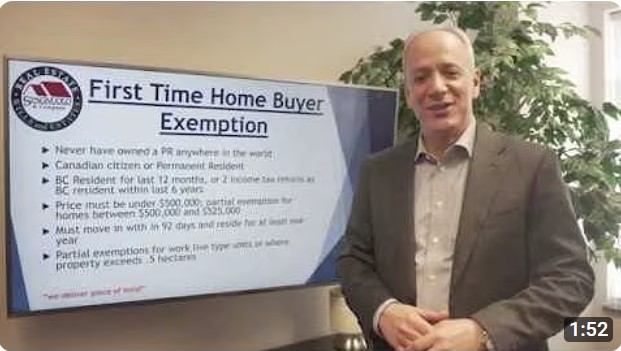
This provincial program reduces or completely eliminates your upfront Property Transfer Tax (PTT). Qualifying buyers receive a full exemption on the first $500,000 of a property’s value for homes priced up to $835,000, saving you up to $8,000 at closing. A sliding partial exemption applies up to $860,000.
Yes! Under the federal Home Buyers’ Plan (HBP), you can withdraw up to $60,000 tax-free from your RRSP to use toward your down payment. Couples buying together can stack this to access up to $120,000 combined.
.In Canada, the minimum down payment is 5% on the first $500,000 of the purchase price. For the portion between $500,000 and $999,999, you need 10% on that remaining balance. Any purchase of $1.5 million or more requires a flat 20% down payment.
.To qualify for prime market interest rates with a down payment under 20% (insured mortgage), CMHC and other mortgage insurers require at least one applicant to have a credit beacon score of 680 or higher.
Lenders look at your total debt-to-income ratios (GDS and TDS) rather than a flat salary figure. Generally, your housing expenses shouldn’t exceed 39% of your gross income, and your total debt obligations must stay under 44%.
You can absolutely qualify while on maternity leave. Lenders will use your full return-to-work salary instead of your reduced EI employment insurance income, provided your employer issues a standard confirmation letter verifying your return date and salary terms.